
Financial Advisers: What the Evidence Shows
About one US adviser in 13 has a misconduct record, and many keep working. What research shows about adviser misconduct, conflicts, fees and when advice still helps.
Exposure in commerce and finance: shops, banks, brokers, insurers and investment settings.
About one US adviser in 13 has a misconduct record, and many keep working. What research shows about adviser misconduct, conflicts, fees and when advice still helps.
47% of US MLM participants lost money and 27% broke even. What surveys, FTC cases and experiments show about multi-level marketing and who pays.
9% of US checking accounts pay 79% of overdraft fees. What research shows about who pays, why alerts help only a little, and what happened to the CFPB fee cap.
Randomised experiments show manipulative interface design nearly quadrupling acceptance of an unchanged offer, while raising its price fourfold changed nothing. What works, what is overstated, and why enforcement rather than vigilance is what altered the interfaces.
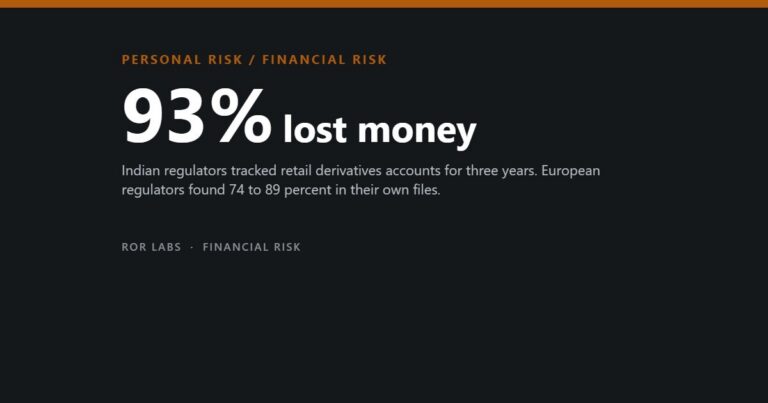
European regulators found 74-89% of retail CFD accounts losing money; India found over 91% of derivatives traders losing. What the regulatory records and trade-level research show about how leverage, expiry and spreads take money from retail traders – including the study arguing the losses are overstated.
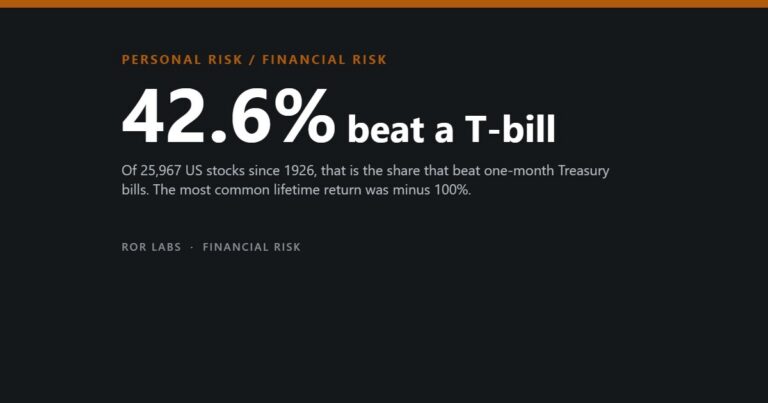
Only 42.6% of 25,967 US stocks beat Treasury bills over their lifetime, and the most common outcome was a total loss. What the research on individual investors, day traders and active funds shows about how money is actually lost in the stock market.
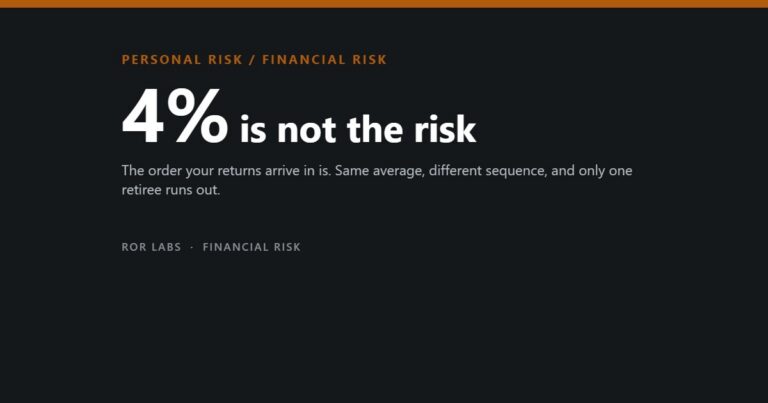
While you are saving, only the average return matters. The moment you start withdrawing, the order matters enormously – and a bad first decade does permanent damage. Where the 4% rule came from, what Morningstar puts the number at now, and why planning to average life expectancy is a coin flip.