Omega-3 food sources and the spoon your body barely converts
Key takeaways · 10 min read
- There is an adequate intake for ALA — 1.6 g for men, 1.1 g for women — and none for EPA or DHA.
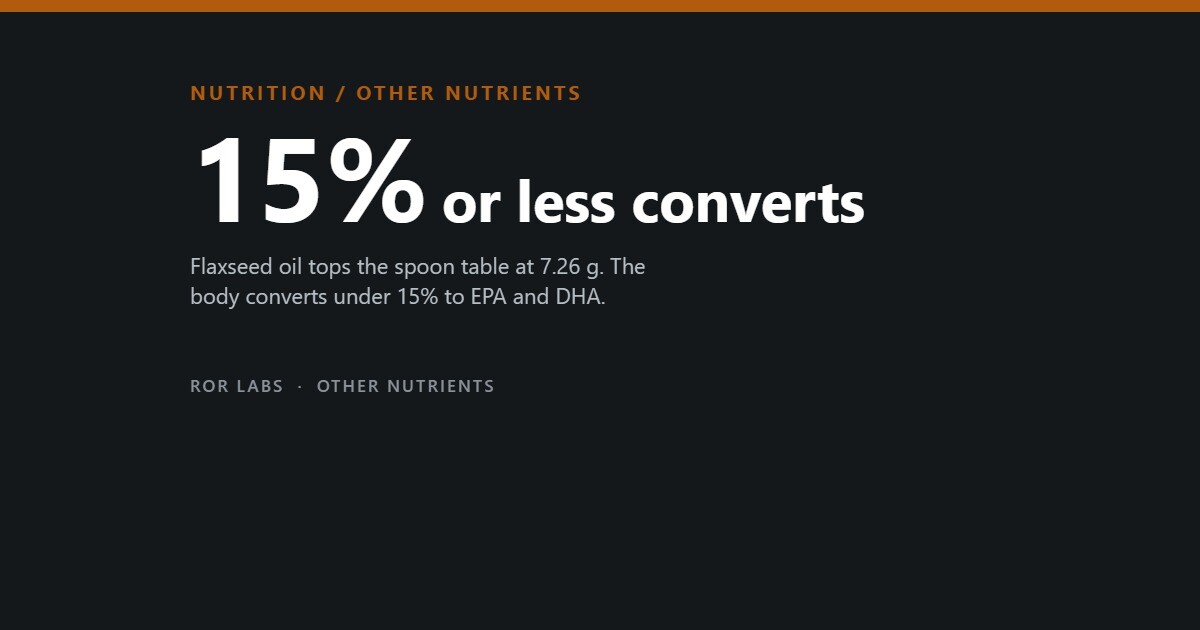
- A tablespoon of flaxseed oil holds 7.26 g of ALA, but the body converts under 15% of it into EPA and DHA.
- A tablespoon of salmon oil holds 4.24 g of EPA plus DHA, about 47 times the average American daily intake from food.
- At one gram a day, VITAL and ASCEND found no effect on their primary outcomes. At four grams, REDUCE-IT and STRENGTH disagreed, and the placebo is the argument.
A tablespoon of flaxseed oil holds 7.26 grams of omega-3 fat. That is four and a half times the adequate intake for an adult man, and more than six times the figure for a woman. On a spoon-by-spoon ranking of foods it wins easily, and nothing from the sea comes close.
It is also the wrong kind for most of what omega-3s are sold for. The omega-3 in flaxseed is alpha-linolenic acid, and the body converts less than 15% of it into the two long-chain forms, EPA and DHA, that fish oil capsules contain and that the big heart trials tested. The top of the table is mostly a starting material.
This article covers what omega-3s do, which foods carry each kind, what happens when intake is low, what the large supplement trials actually found — including the placebo argument that still divides cardiologists — and the heart-rhythm signal that turned up in trial after trial.
Two kinds of omega-3, and only one has a target
Omega-3s are polyunsaturated fats with their first double bond three carbons from the tail end. Alpha-linolenic acid (ALA) is essential: the body cannot make it, so it must come from food. EPA and DHA can be made from ALA, slowly and in small amounts, or eaten directly in fish and seafood. DHA is concentrated in the retina and the brain, and all three are built into cell membranes and used to make signalling molecules that affect inflammation, clotting and blood vessels.
The reference numbers for omega-3
US dietary reference intakes and average intakes for adults, in grams per day.
Source: NIH Office of Dietary Supplements, omega-3 fact sheet for health professionals.
The Institute of Medicine set an adequate intake only for ALA, and it did not set one for EPA or DHA at all. That absence matters. When a label, a doctor or a website recommends a daily milligram figure for fish oil, it is borrowing from a professional body’s advice or a trial dose, not from a dietary reference intake.
Classical essential fatty acid deficiency — rough, scaly skin and dermatitis — is described by the NIH as virtually nonexistent in healthy people in the United States. Most Americans meet the ALA figure from ordinary cooking oils and nuts. The real question with omega-3s is not deficiency. It is whether eating or taking more EPA and DHA than the typical 90 milligrams a day changes anything.
Three foods by the spoonful: the plant kind
The series ranks foods by what one level tablespoon delivers, using USDA per-100-gram values: 13.6 grams for an oil, 15 grams for a solid. For ALA the result is clear.
ALA in one level tablespoon
USDA FoodData Central, SR Legacy. Oils at 13.6 g, seeds and nuts at 15 g. FDC identifiers given so the figures can be checked.
Source: USDA FoodData Central. ALA values are for 18:3 omega-3; none of these foods contains measurable EPA or DHA.
Flaxseed oil, whole flaxseed and chia seeds are the three. The flaxseed oil figure matches the NIH’s own table exactly. Walnuts and canola oil sit lower per spoon but are eaten in larger amounts, and they are a large part of why ALA intake is adequate for most people without anyone trying.

Conversion is the catch. The NIH summarises the reported rates as less than 15%, taking place mainly in the liver. So the spoon that wins this table supplies plenty of ALA, which the body needs anyway, and only a modest amount of the long-chain forms. If the aim is EPA and DHA specifically, the plant table is the wrong table.
Three foods by the spoonful: the sea kind
Ranked by EPA plus DHA per tablespoon, the top places go to oils that are sold, not cooked with.
EPA plus DHA in one level tablespoon
USDA FoodData Central, SR Legacy. Oils at 13.6 g, caviar at 15 g, with a standard fish serving for comparison.
Source: USDA FoodData Central. EPA is 20:5 omega-3 and DHA is 22:6 omega-3.
Salmon, menhaden and sardine oils are the three. One tablespoon of salmon oil carries about 47 times what the average American adult gets from food in a day. Cod liver oil, fourth, comes with a warning of its own: the same tablespoon holds 136% of the upper limit for vitamin A, which is why the vitamin D article treats it as a supplement to be counted, not a food to be spooned.
The ordinary way to eat these fats is fish, and a single 85-gram serving of farmed salmon supplies 1.83 grams, more than a spoonful of caviar. The Dietary Guidelines for Americans advise at least eight ounces of seafood a week for adults, and eight to twelve ounces of lower-mercury fish during pregnancy.
What the big trials found
Four large trials dominate the evidence, and they split into two groups: two tested about one gram a day, the dose in a typical capsule, and two tested four grams of a prescription product.
Four large trials of marine omega-3
Hazard or rate ratio for each trial’s primary cardiovascular outcome against its comparator. Below 1.00 favours omega-3.
Source: Manson et al., NEJM 2019; ASCEND group, NEJM 2018; Bhatt et al., NEJM 2019; Nicholls et al., JAMA 2020. VITAL 0.92 (0.80–1.06); REDUCE-IT 0.75 (0.68–0.83); STRENGTH 0.99 (0.90–1.09).
At the capsule dose, the primary outcomes did not move. VITAL, in men aged 50 and over and women aged 55 and over, unselected for heart risk, found no significant reduction in its composite of heart attack, stroke and cardiovascular death, although heart attacks alone fell by 28%, a secondary finding. ASCEND, in people with diabetes, found no difference in serious vascular events.
At four grams the two trials disagree completely. REDUCE-IT, using purified EPA in statin-treated patients with raised triglycerides, cut its primary outcome by a quarter. STRENGTH, using a mixture of EPA and DHA in a similar population, found nothing and was stopped early.
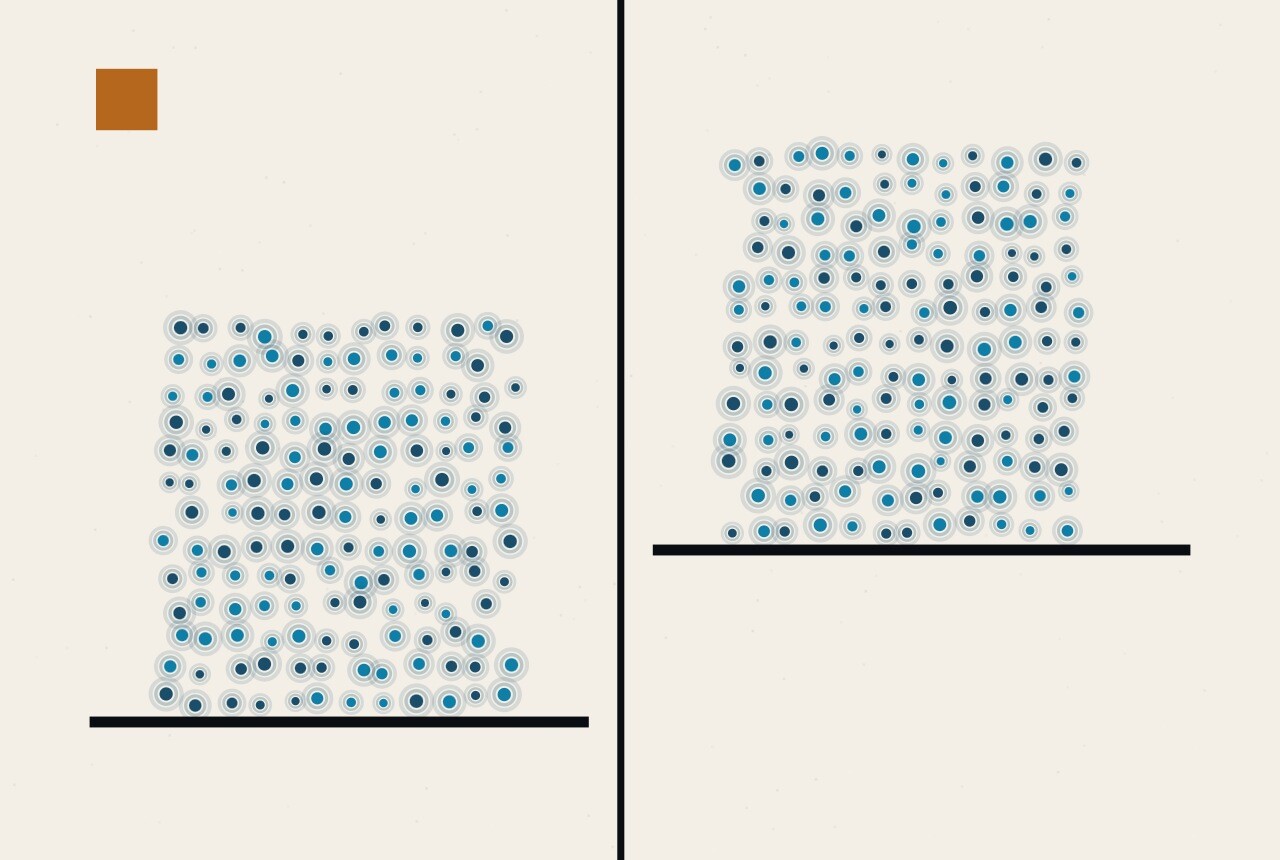
The comparators are where the argument lives. REDUCE-IT used mineral oil as its placebo, and in that placebo group LDL cholesterol and inflammatory markers rose; high-sensitivity C-reactive protein went from 2.1 to 2.8 mg/L after a year. The NIH notes that mineral oil is not a neutral placebo. A review supporting the choice, published in a supplement funded by the drug’s manufacturer and with six of its ten authors on that company’s staff, argued the effect was too small to matter; critics answer that the two trials differ in active drug and placebo at the same time, so nobody can say which difference produced the gap. Both positions are argued by cardiologists; the data do not settle it.
Across all of it, the Cochrane review of 86 trials found that omega-3 supplements lowered triglycerides by about 15% and slightly reduced cardiovascular death and coronary events, but did not affect death from all causes, stroke or arrhythmia.
The heart-rhythm signal
One finding kept recurring. Several of the large trials reported more atrial fibrillation, an irregular heart rhythm that raises stroke risk, in the omega-3 groups.
Omega-3 and atrial fibrillation
Two kinds of evidence. Above 1.00 means more atrial fibrillation.
Overall: 1.25
Doses of 1 g/day or less: 1.12
Doses above 1 g/day: 1.49
Risk rose about 11% per extra gram
Regular fish oil users without heart disease: 1.13
Stroke in the same group: 1.05
Users who already had AF, progression to major events: 0.92
Observational; dose not recorded
Source: Gencer et al., Circulation 144(25):1981–1990 (2021); Chen et al., BMJ Medicine 3:e000451 (2024).
The trial meta-analysis found a 25% higher relative risk overall and a clear dose pattern. The UK Biobank analysis, published in 2024, found a smaller increase in healthy people who reported regular fish oil use, alongside an apparent benefit in people who already had heart disease — which is why it made headlines in both directions.
The same cohort gives other answers too. A 2020 analysis of the same UK Biobank participants linked habitual fish oil use to 13% lower all-cause mortality. Neither is a trial, and both depend on a single yes-or-no question about supplement use with no dose attached; the difference between them is largely which outcomes the analysts chose to follow.
The newest word is not final either. A meta-analysis of 34 trials, posted as a preprint in December 2025, found the rise in atrial fibrillation only in high-risk patients taking high doses, about 3 grams a day, with an absolute increase under 1%. Its authors include William Harris, who founded a company that sells omega-3 blood tests. That does not make it wrong, but it is a reason to wait for peer review.
Keeping intake where it should be
For ALA, ordinary eating is enough for most people; a spoon of ground flaxseed or a handful of walnuts adds a lot for little effort. For EPA and DHA, the evidence-backed route is fish, a couple of times a week, favouring lower-mercury choices such as salmon, sardines, anchovies, trout and Pacific oysters.
Supplements are where the caution belongs. The FDA considers up to 5 grams a day of EPA and DHA from supplements safe, but doses of 2 grams and above can lengthen bleeding time, and anyone on an anticoagulant such as warfarin should raise it with the prescriber. The four-gram products that showed a benefit are prescription drugs used under supervision, not the capsules on a pharmacy shelf.
Questions people ask
Is flaxseed oil a substitute for fish oil?
Not for EPA and DHA. It is an excellent source of ALA, but reported conversion rates are under 15%, and none of the major heart trials tested ALA.
Do fish oil capsules prevent heart attacks?
At the usual one-gram dose, the two largest trials found no reduction in their primary outcomes. VITAL saw fewer heart attacks as a secondary finding, which is suggestive, not established.
Why did REDUCE-IT work when STRENGTH did not?
Nobody knows for certain. The drugs differed and so did the placebos. Mineral oil raised some markers in REDUCE-IT’s control group, and cardiologists still disagree over how much of the difference that explains.
Should I worry about atrial fibrillation?
The trial signal is strongest above one gram a day and in people already at high heart risk. If you have had atrial fibrillation or take a high-dose product, discuss it with your doctor.
Is cod liver oil a good way to get omega-3?
It supplies EPA and DHA, but a tablespoon also exceeds the vitamin A upper limit. Counting it by the teaspoon, and not alongside other vitamin A supplements, is the safer habit.
The short version
- There is an adequate intake for ALA — 1.6 g for men, 1.1 g for women — and none for EPA or DHA.
- A tablespoon of flaxseed oil holds 7.26 g of ALA, but the body converts under 15% of it into EPA and DHA.
- A tablespoon of salmon oil holds 4.24 g of EPA plus DHA, about 47 times the average American daily intake from food.
- At one gram a day, VITAL and ASCEND found no effect on their primary outcomes. At four grams, REDUCE-IT and STRENGTH disagreed, and the placebo is the argument.
- Atrial fibrillation rose in the trials, most clearly above one gram a day.
- Fish twice a week is the route with the fewest open questions.
This is a summary of published research, not medical advice. If you take an anticoagulant or antiplatelet drug, have had atrial fibrillation, are pregnant, or are considering a prescription omega-3 product, talk to your doctor or a registered dietitian before starting or changing a supplement.
Further reading: Bassuk and Manson, Cardiovascular Research (2022), for the VITAL investigators’ own review of the trial evidence. Gencer et al., Circulation 144(25):1981–1990 (2021), for the atrial fibrillation meta-analysis and its dose pattern. Sherratt et al., Cardiovascular Research (2023), for the case that the mineral-oil placebo does not explain REDUCE-IT.
- Science Fictions, Stuart Ritchie (2020). On how exciting findings outrun the evidence and what replication does to them — the arc omega-3 research has followed since the 1970s. Written from inside psychology, and sharper on method than on nutrition.
- Food Isn’t Medicine, Joshua Wolrich (2021). A doctor’s case against treating foods and supplements as cures. Deliberately combative, and written for a general reader rather than a clinician.
- The Scout Mindset, Julia Galef (2021). On holding a question open when the evidence is split, which is where the four-gram trials leave everyone.
Sources
NIH Office of Dietary Supplements, omega-3 fatty acids fact sheet for health professionals: the adequate intakes for ALA, the absence of intake recommendations for EPA and DHA, the under-15% conversion rate, average intakes and the 90 mg figure, 7.8% supplement use, the description of deficiency, the FDA 5 g/day statement, bleeding and warfarin, the mineral-oil and corn-oil placebo note, and the summary of the Cochrane review. — USDA FoodData Central, SR Legacy, nutrients 619, 629 and 621, for the tablespoon tables; FDC identifiers are printed in the figures. — US Departments of Agriculture and Health and Human Services, Dietary Guidelines for Americans 2020–2025, seafood advice. — Manson JE, Cook NR, Lee IM, et al. New England Journal of Medicine 380(1):23–32 (2019). — ASCEND Study Collaborative Group. New England Journal of Medicine 379(16):1540–1550 (2018). — Bhatt DL, Steg PG, Miller M, et al. New England Journal of Medicine 380(1):11–22 (2019). — Nicholls SJ, Lincoff AM, Garcia M, et al. JAMA 324(22):2268–2280 (2020). — Abdelhamid AS, Brown TJ, Brainard JS, et al. Cochrane Database of Systematic Reviews CD003177.pub5 (2020). — Olshansky B, Chung MK, Budoff MJ, et al. European Heart Journal Supplements, doi:10.1093/eurheartj/suaa117 (2020). — Sherratt SCR, Mason RP, Libby P, Steg PG, Bhatt DL. Cardiovascular Research, doi:10.1093/cvr/cvad188 (2023). — Bassuk SS, Manson JE. Cardiovascular Research 119(6):1297 (2022). — Gencer B, Djoussé L, Al-Ramady OT, et al. Circulation 144(25):1981–1990 (2021). — Chen G, Qian ZM, Zhang J, et al. BMJ Medicine 3(1):e000451 (2024). — Li ZH, Zhong WF, Liu S, et al. BMJ 368:m456 (2020). — Abuknesha NR, O’Keefe JH, Qian F, et al. medRxiv preprint, doi:10.1101/2025.12.14.25342167 (2025).